Call Us:+86 17381572955
RCS vs GRS Certification: Which Recycled Standard Is Right for Your Brand?

Why Do Some “Recycled” Products Sell at a Premium?
A common sourcing misconception is assuming that all recycled textile claims carry the same market value.
In reality, a T-shirt labeled “Recycled Cotton” can fall under either RCS (Recycled Claim Standard) or GRS (Global Recycled Standard) — and that single certification choice can directly affect:
- retail pricing
- Amazon platform visibility
- EU/US buyer acceptance
- ESG reporting credibility
- supply chain compliance cost
- brand premium potential
This is why understanding RCS vs GRS certification differences is critical for modern apparel brands and textile suppliers.
What Is RCS Certification?
RCS (Recycled Claim Standard) is a Textile Exchange standard focused on recycled material verification and chain of custody traceability.
Core Requirements
- minimum 5% recycled content
- verified transaction certificates
- chain-of-custody traceability
- supplier documentation review
- material balance verification
Best For
- startup fashion brands
- basic T-shirts
- sweatshirts
- budget-sensitive sustainable collections
- fast product launches
The biggest advantage of RCS is speed and affordability.
What Is GRS Certification?
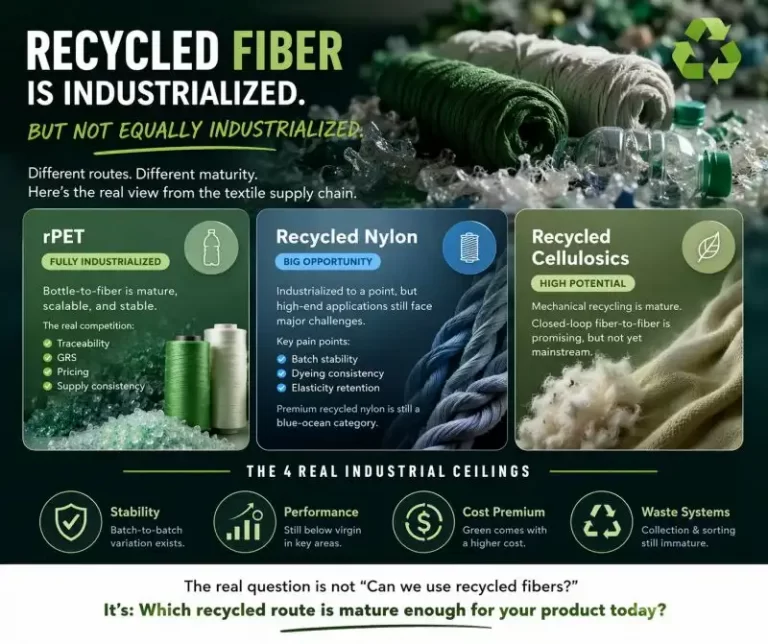
GRS (Global Recycled Standard) is the more advanced Textile Exchange certification. It includes everything in RCS plus manufacturing compliance requirement.
Minimum Threshold
- 20% recycled content for B2B certification
- 50% recycled content for logo/product claims
Additional Audit Modules
- environmental management
- wastewater and emission compliance
- chemical restrictions
- worker welfare
- social responsibility
- restricted substance controls
- chain of custody
This makes GRS ideal for premium collections and global retail channels.
RCS vs GRS Side-by-Side Comparison
| Comparison Area | RCS | GRS |
| Minimum recycled | 5% | 20% |
| Consumer-facing logo threshold | 5% | 50% |
| Chain of custody | Yes | Yes |
| Environmental audit | No | Yes |
| Social compliance | No | Yes |
| Chemical management | No | Yes |
| Certification speed | 1-3 months | 3-6 months |
| Typical cost | Lower | Higher |
| Premium potential | Basic | High |
The Most Important Rul: Material Compatibility
One of the most practical sourcing rules is:
GRS-certified input can support RCS claims, but RCS-certified input cannot be upgraded into GRS-certified final products.
This directly affects:
- supplier qualification
- fabric mill selection
- MOQ planning
- future ESG starategy
- long-term retail channel expansion
Choosing the wrong standard at the yarn or fabric stage can create expensive recertification delays later.
Which Brands Should Choose RCS?
Choose RCS if your strategy includes:
- recycled content between 5-20%
- entry-level sustainable collections
- cost-sensitive e-commerce launches
- Amazon or DTC basics
- fast launch cycles
- lower compliance budgets
Typical use cases:
- basic tees
- sweatshirts
- leggings
- cotton fleece
- jersey basics
Which Brands Should Choose GRS?
Choose GRS if your brand focuses on:
- EU / US premium retail
- Amazon Climate Pledge Friendly
- outdoorwear
- technical jackets
- performance activewear
- ESG reporting
- large retail buyers
- long-term sustainability positioning
Typical products:
- recycled polyester jackets
- technical shells
- outdoor pants
- premium activewear
- branded sustainable capsules
Best Strategy for Apparel Brands: Hybrid Certification
For many brands, the smartest commercial solution is:
Premium lines → GRS
Use for:
- outerwear
- technical fabrics
- sustainable hero products
- premium capsules
Volume basics → RCS
Use for:
- tees
- hoodies
- entry-level essentials
This hybrid model balances:
- margin
- speed
- compliance cost
- ESG storytelling
- retail scalability
Conclusion: Certification Should Follow Business Strategy
The biggest mistake brands make is asking:
“Which certification is cheaper?”
The better question is:
“Which certification supports our pricing, buyers, and long-term sustainability roadmap?”
RCS supports speed and affordability.
GRS supports premium positioning and global retail trust.
The right certification is not just about compliance—it is about commercial strategy.